
No products in the cart.



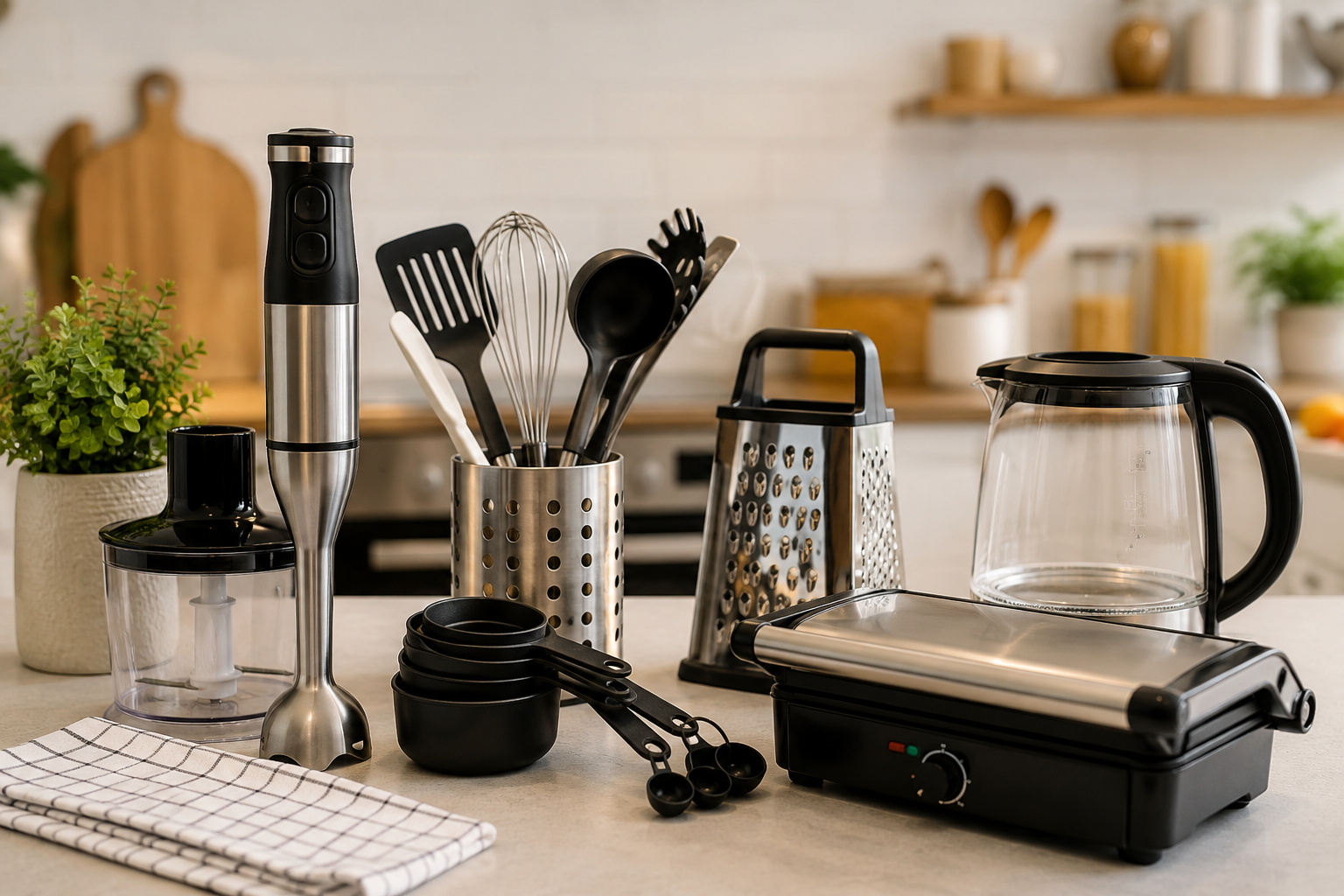
A well-equipped kitchen is not about owning expensive appliances — it’s about having the right tools that make everyday cooking easier, faster, and more efficient. In most homes, especially on a budget, a small set of essential gadgets is enough to handle daily cooking needs comfortably.
Many people believe that a great kitchen requires a large collection of gadgets, gleaming stainless steel appliances, and the latest cooking technology. In reality, most home cooks use the same handful of tools day after day. The trick isn’t quantity — it’s choosing a few reliable, well-made items that cover the majority of cooking tasks without cluttering your counters or draining your budget.
By choosing practical and affordable items, you can build a kitchen that is both functional and organized. This guide breaks down exactly which gadgets are truly essential, which ones save the most time, and how to store everything so your kitchen stays efficient rather than chaotic.
The good news is that “well-equipped” doesn’t mean expensive. Most of the tools discussed below are inexpensive, widely available, and built to last for years with proper care. Investing a little thought into which gadgets you actually need — rather than which ones look impressive — is the real secret to a kitchen that works for you instead of against you.
A sharp, good-quality knife is the most important tool in any kitchen. It helps you chop vegetables, slice fruits, and prepare ingredients quickly and safely. A dull knife, by contrast, is not only frustrating to use but also more dangerous, since it requires more pressure and is more likely to slip.
Pair your knife with a sturdy cutting board to protect your kitchen surfaces and maintain hygiene. Wooden boards are gentle on knife edges and have natural antibacterial properties, while plastic boards are lightweight and dishwasher-safe. Many households keep at least two boards — one for vegetables and fruits, and one for raw meat — to avoid cross-contamination.
Instead of buying many knives, one reliable multipurpose chef’s knife is enough for most tasks. A single well-maintained knife, kept sharp with occasional honing, will outperform an entire drawer of cheap, dull blades.
Cookware is the foundation of your kitchen. A few basic pots and a non-stick pan can handle almost all types of cooking — from frying eggs to preparing curries. You don’t need a full matching cookware set; a medium saucepan, a larger pot for soups or boiling, and one good non-stick frying pan will cover the vast majority of daily meals.
Non-stick cookware reduces the need for excess oil and makes cleaning much easier, which is ideal for everyday use. This is especially helpful for busy households where time spent scrubbing pans is time better spent elsewhere. When shopping on a budget, prioritize one high-quality non-stick pan over several cheap ones — a good pan will last significantly longer and cook more evenly.
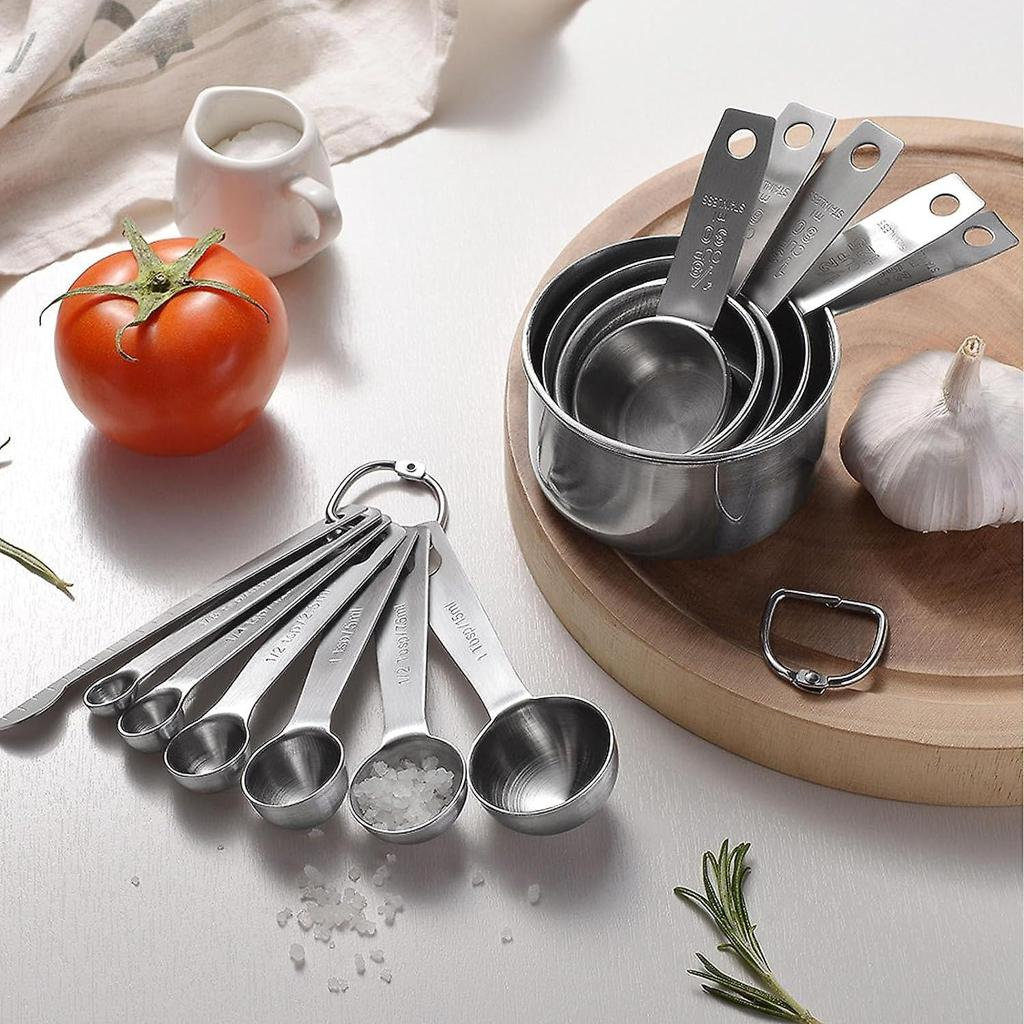
Even in simple cooking, measurements matter. Measuring tools help maintain consistency, especially when trying new recipes or baking, where precise ratios of flour, sugar, or liquid can make the difference between success and failure.
They are affordable, long-lasting, and extremely useful in achieving better results. A basic set of measuring cups and spoons takes up very little storage space but pays for itself many times over in improved cooking outcomes and reduced food waste from failed recipes.
A manual vegetable chopper is a great addition for busy kitchens. It helps cut vegetables quickly and evenly, saving time and effort compared to chopping everything by hand. This is especially helpful when preparing meals for a family, where the volume of chopping required for a single dinner can otherwise take up a significant chunk of prep time.
Many affordable choppers come with interchangeable blades that allow you to dice, slice, or julienne vegetables in seconds, making meal prep far less tedious.
A blender is one of the most versatile kitchen gadgets available. It can be used to make juices, shakes, sauces, chutneys, and even batter. It reduces manual effort and speeds up food preparation significantly, replacing what would otherwise require a mortar and pestle, a whisk, and considerable elbow grease.
A good blender is particularly valuable for households that prepare fresh juices, smoothies, or traditional sauces and pastes regularly, since it turns a lengthy manual process into a two-minute task.
An air fryer is a modern kitchen appliance that allows you to cook crispy food with very little oil. While it’s not essential for every home, it is a useful option for healthier cooking if your budget allows. It works by circulating hot air around food, achieving a texture similar to deep frying without the excess oil, mess, or lingering smell.
For households that frequently cook fried snacks, reheating leftovers, or preparing quick meals, an air fryer can be a worthwhile addition — but it’s reasonable to skip it if your budget is tight, since none of the essential recipes in a typical kitchen truly require one.
Simple tools like peelers, graters, and garlic pressers may seem basic, but they make cooking much easier and faster. These are low-cost items with high daily usefulness — a peeler alone can save several minutes on any recipe involving potatoes, carrots, or fruit.
A grater is useful for cheese, vegetables, and even ginger or garlic, while a garlic press eliminates the tedious job of mincing garlic by hand. None of these tools cost much individually, but together they noticeably speed up everyday cooking.
Storage plays a key role in maintaining a clean kitchen. Airtight containers keep food fresh, prevent moisture, and reduce waste. They also make your kitchen look neat and organized, since matching containers replace a jumble of half-used bags and mismatched boxes.
Airtight containers are especially useful for storing dry goods like rice, flour, lentils, and spices, keeping them free from pests and extending their shelf life considerably compared to leaving them in their original packaging.
In small kitchens, proper space management is essential. Using shelves, racks, or stacking systems helps maximize storage without making the kitchen feel crowded. An organized kitchen improves both efficiency and comfort, since everything has a designated place and is easy to find.
Vertical storage solutions — such as wall-mounted racks for pots and pans, or stackable shelves inside cabinets — are particularly useful in compact kitchens where counter and cabinet space is limited. A small investment in organizers can make a kitchen feel significantly larger and more functional.
The goal of building a well-equipped kitchen isn’t to collect every gadget on the market — it’s to identify the small set of tools you’ll actually use every day and invest in good versions of those. A sharp knife, reliable cookware, a few time-saving gadgets, and smart storage will cover almost every cooking need in a typical household.
Start with the basics first: a knife, a cutting board, and a couple of quality pots and pans. From there, add time-saving tools like a chopper or blender as your budget allows, and finish with storage solutions to keep everything organized. Built gradually and thoughtfully, even a modest kitchen can become efficient, functional, and genuinely enjoyable to cook in.
It also helps to think in terms of priorities rather than a single big shopping trip. Buying everything at once often leads to overspending on gadgets you rarely use, while skipping items you actually needed. Instead, track what frustrates you in the kitchen over a couple of weeks — maybe chopping takes too long, or your food spoils faster than expected — and let those real pain points guide your next purchase.
It’s also worth remembering that quality matters more than quantity. A single well-made knife, pan, or container will often outlast five cheaper versions combined, and will perform more consistently in the meantime. When shopping on a budget, it’s usually smarter to buy fewer, better tools rather than filling your kitchen with items that wear out or underperform within a few months.
Finally, keep in mind that every household cooks differently, so the “essential” list will always shift slightly based on your habits. A family that bakes often will prioritize measuring tools and mixing bowls, while someone who cooks mostly stir-fries might lean more on a good wok and sharp knife. Use this guide as a starting framework, then adjust it based on the meals you actually cook most often.
1. What are the most essential kitchen gadgets for beginners? A knife, cutting board, cookware, measuring tools, and storage containers are enough to start.
2. Which kitchen gadgets save the most time? Vegetable choppers, blenders, and small prep tools help reduce cooking time significantly.
3. Are expensive kitchen appliances necessary? No, basic and affordable tools are enough for everyday cooking needs.
4. What is the best budget kitchen setup? Focus on essential tools, simple cookware, and proper storage solutions.
5. How can I organize a small kitchen efficiently? Use shelves, airtight containers, and keep only necessary items to avoid clutter.
6. Is an air fryer necessary for every home? No, it’s optional. It’s useful for healthy cooking but not required for basic meals.
7. How do I choose good-quality kitchen tools on a budget? Look for durable materials, simple designs, and multi-purpose tools instead of buying many items.
8. Can I manage cooking with minimal kitchen tools? Yes, a few essential tools are enough for preparing most daily meals efficiently.

Leave a comment