
No products in the cart.



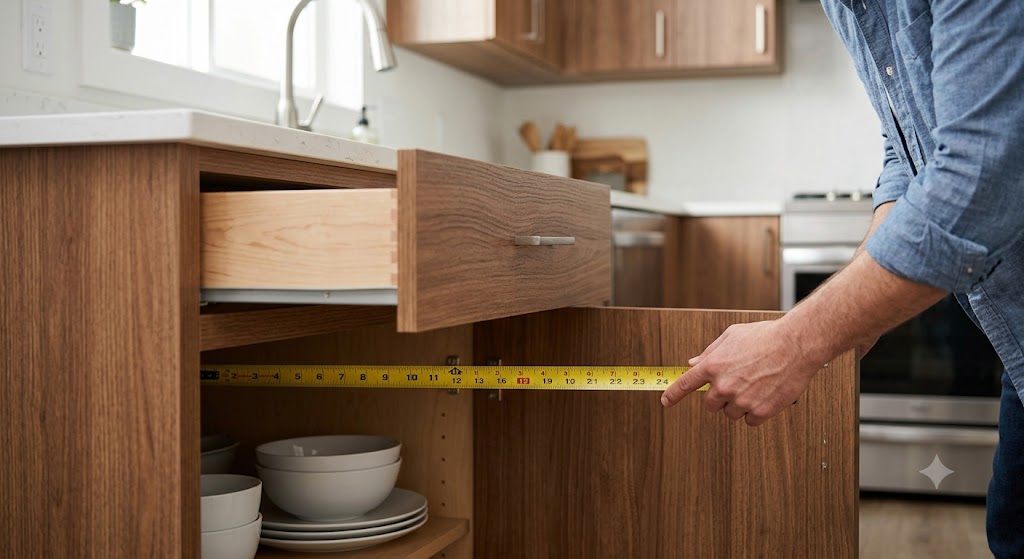
When planning a kitchen, most homeowners focus on colors, finishes, and appliances. However, one of the most important elements that directly affects functionality is often overlooked: kitchen cabinet depth. The depth of your cabinets determines how efficiently you can store items, how comfortable your workspace feels, and how well your kitchen layout supports daily activities.
Understanding how deep kitchen cabinets are is essential whether you’re remodeling an existing space or designing a new one. The right cabinet depth ensures proper workflow, prevents overcrowding, and helps create a balanced, visually appealing kitchen. On the other hand, poor planning can lead to cramped spaces, inaccessible storage, and awkward layouts.
In this comprehensive guide, we’ll explore standard cabinet dimensions, including base, wall, and pantry cabinets, along with practical tips to help you choose the best depth for your kitchen.
Before diving into specific cabinet types, it’s important to understand that most kitchen cabinetry follows industry standards. These measurements are designed based on ergonomics, usability, and compatibility with common appliances.
Standard dimensions help ensure consistency across kitchens and make it easier to install appliances, countertops, and accessories. However, these measurements are not fixed rules. They serve as guidelines that can be adjusted depending on your kitchen size, layout, and personal preferences.
The three main types of cabinets include:
Each of these has a different purpose and, therefore, a different depth.
Base cabinets form the foundation of your kitchen. They support countertops, house sinks and appliances, and provide storage for everyday items like cookware and utensils.
The standard base cabinet depth is 24 inches (about 61 cm), measured from the wall to the front of the cabinet box. This measurement does not include the countertop overhang.
The 24-inch depth has become the industry standard because it strikes the perfect balance between storage and accessibility. It provides enough space to store pots, pans, and kitchen tools while still allowing you to reach items at the back without difficulty.
This depth also ensures that the countertop workspace remains comfortable to use. If base cabinets were significantly deeper, reaching across the counter would become inconvenient.
When a countertop is installed, it typically extends beyond the cabinet by 1 to 1.5 inches. This overhang serves several purposes:
With the countertop included, the total depth of base cabinets is usually around 25 to 26 inches.
Although 24 inches is standard, there are situations where different depths may be used:
However, increasing depth too much can make it difficult to reach items at the back, so careful planning is required.
Wall cabinets are mounted above the countertop and are designed to provide accessible storage without interfering with workspace.
The standard wall cabinet depth is 12 inches (about 30 cm).
Unlike base cabinets, wall cabinets are positioned at eye level. A shallower depth ensures that they do not protrude too far into the workspace, which could:
This depth allows you to store commonly used items such as dishes, glasses, and pantry goods while maintaining comfort and safety.
While 12 inches is standard, wall cabinets can vary depending on design needs:
Deeper wall cabinets can increase storage but may reduce headroom and visual openness.
Pantry cabinets, also known as tall cabinets, are designed for maximum storage. These cabinets typically extend from floor to ceiling and are used for storing food, appliances, and bulk items.
The standard pantry cabinet depth is 24 inches, similar to base cabinets.
Because pantry cabinets are used for storing larger items, a deeper design makes sense. This depth allows for:
Some pantry cabinets can go deeper, up to 25–26 inches, depending on the layout and storage needs.
In some kitchens, especially smaller ones, shallower pantry cabinets (12–18 inches) are used to save space. These are ideal for storing canned goods and smaller items.
Kitchen islands have become a central feature in modern kitchens. They provide additional workspace, storage, and seating.
The depth of island cabinets can vary widely depending on their purpose.
When seating is included, additional space is required for comfort:
This allows enough legroom for stools and ensures a comfortable dining experience.
While standard dimensions provide a strong starting point, several factors can influence your final decision.
In smaller kitchens, maintaining adequate walking space is crucial. Using standard or slightly shallower cabinets helps prevent the space from feeling cramped.
Larger kitchens, on the other hand, allow for more flexibility. Deeper cabinets can be used to increase storage without compromising comfort.
The kitchen work triangle (sink, stove, refrigerator) plays a major role in determining cabinet depth. Proper spacing ensures efficient movement and prevents congestion.
Modern appliances are often designed to align with standard cabinet depths. For example:
Choosing non-standard cabinet depths may require custom appliance solutions.
Your cooking habits and storage requirements should guide your decisions.
Deeper cabinets can make it harder to reach items at the back. Solutions like pull-out shelves and organizers can improve accessibility.
While standard sizes work for most kitchens, custom cabinet depths can offer unique benefits.
However, custom cabinets are typically more expensive, so they should be carefully planned.
Accurate measurements are essential when planning or renovating a kitchen.
Measure from the wall to the front edge of the cabinet frame (not including the countertop).
Measure from the wall to the front of the cabinet door when closed.
When determining kitchen cabinet measurements, homeowners often make avoidable mistakes.
Deep cabinets may look impressive but can reduce usability if not planned properly.
Insufficient space between cabinets can make movement difficult.
Too much storage depth can lead to clutter and inaccessible items.
Deep cabinets combined with poor lighting can make it difficult to see inside.
As kitchen design continues to evolve, cabinet dimensions may also adapt. Some emerging trends include:
These innovations aim to improve functionality while maintaining a sleek appearance.
Understanding how deep kitchen cabinets are is essential for creating a kitchen that is both functional and visually appealing. Standard depths—24 inches for base cabinets, 12 inches for wall cabinets, and around 24–26 inches for pantry cabinets—provide a reliable foundation for most designs.
However, the ideal cabinet depth ultimately depends on your kitchen size, layout, and personal needs. By carefully considering these factors and planning your measurements accurately, you can create a kitchen that not only looks beautiful but also works efficiently for everyday life.
Whether you stick with standard dimensions or opt for custom solutions, thoughtful design choices will ensure your kitchen remains comfortable, practical, and timeless for years to come.
If you want, I can also create SEO titles, schema markup, or a thumbnail prompt for this article.

Leave a comment