
No products in the cart.



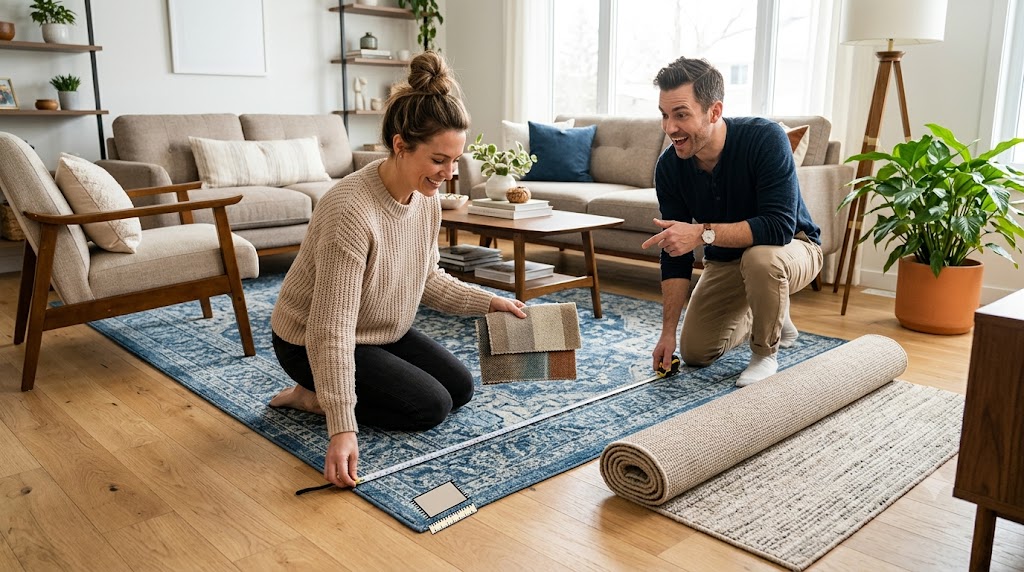
Have you ever decorated your living room, bought a nice rug, placed it on the floor… and still felt like something looks off? The sofa is fine, the table is okay, but the room just doesn’t feel complete. This usually happens because of one simple mistake: the rug size is wrong.
Most people don’t realize how important a rug is. It’s not just something you put on the floor. It connects your furniture, defines your space, and makes your living room feel warm and complete. But choosing the wrong rug size can make even expensive furniture look awkward, no matter how much money you spent on the sofa or the coffee table.
In fact, rug size is one of those small details that most people notice without knowing why. A visitor walking into your living room might not be able to say exactly what feels off, but a tiny rug floating in the middle of a large floor, or an oversized rug swallowing the whole room, will always create a subtle sense of imbalance.
If you’ve ever wondered what size rug should I get for my living room or felt confused about how to choose rug size for living room, this guide is just for you. Don’t worry — everything will be explained in very simple language so even a beginner can understand easily, with practical examples you can apply the moment you finish reading.
It also helps to remember that rug shopping mistakes are extremely common, even among people who consider themselves fairly good at home decor. Unlike a sofa or a chair, a rug is flat and often looks completely different once it is unrolled across an entire floor compared to how it looked folded up in a store display or as a small thumbnail on a shopping website. That is exactly why this guide focuses so heavily on measuring, comparing standard sizes, and understanding placement rules before you swipe your card on any purchase.
A rug is not just decoration. It plays a big role in how your living room looks and feels. The right rug size can make your space look bigger, more organized, and more stylish. On the other hand, a wrong rug size can break the whole look, even if every other design choice in the room is perfect.
When you follow a proper living room rug size guide, your furniture feels connected instead of scattered. A good rug also creates a comfortable walking area and adds warmth to the room, especially on cold flooring like tile or hardwood.
Many people make the mistake of buying a rug that is too small. This is the number one design mistake. A small rug makes your furniture look like it is floating and disconnected, almost like an island sitting in the middle of an empty sea of flooring. That’s why understanding the best rug size for living room is very important before buying anything.
Beyond appearance, rug size also affects comfort and sound. A properly sized rug absorbs noise, softens footsteps, and gives your seating area a cozier, quieter feel. This matters more than people expect, especially in homes with hard flooring where every footstep or dropped object can echo through the room.
Before choosing a rug, you should know the most common sizes available in the market. These standard rug sizes help you decide what will fit best in your space, and knowing them in advance saves you from endless back-and-forth while shopping.
| Rug Size | Best For |
| 5×7 feet | Small living rooms |
| 6×9 feet | Medium rooms |
| 8×10 feet | Standard living rooms |
| 9×12 feet | Large living rooms |
These are the most popular options used in every living room carpet size guide. Choosing the right one depends on your room size and furniture layout. Some brands also offer in-between sizes like 7×10 feet, which can be a good middle ground if 6×9 feels too small and 8×10 feels slightly too large for your space.
If your living room is unusually large or has an irregular shape, custom rug sizing is also an option through many carpet retailers, though it usually costs more than standard sizes.
It is also worth noting that rug dimensions are sometimes listed slightly differently depending on the brand, so a rug labeled as 8×10 might actually measure a few inches smaller or larger once it arrives. Always check the exact dimensions in the product description rather than relying only on the labeled size category, especially if your room has very little extra space to work with.
Before buying a rug, measuring your space is very important. Many people skip this step and end up buying the wrong size, only to realize the mistake after the rug has already arrived and been unrolled on the floor.
To understand how to measure living room for rug, you should first measure the total floor area. Then, leave some space around the edges so the rug doesn’t touch the walls. This creates a subtle border that makes the room feel finished rather than wall-to-wall carpeted.
This helps you decide the perfect area rug size for living room without guessing. Taking five extra minutes with a tape measure can save you from the hassle of returning a rug that doesn’t fit.
One of the most common questions people ask is: how big should a living room rug be? The answer depends on your layout and furniture, but there are some general principles that apply to almost every room.
A good rug should be large enough to connect your main furniture pieces. It should not look too small or too oversized. Think of the rug as the anchor of the room — everything else, from the sofa to the chairs to the coffee table, should feel like it belongs to the same visual grouping.
Your rug should extend beyond your sofa and chairs so everything feels connected. This is the key to finding the perfect rug size for sofa and overall layout. A helpful way to check this is to stand at the entrance of the room and see if the rug visually ties the furniture together as one unit, rather than looking like separate pieces scattered around.
Choosing the right size is only half the job. Placement matters just as much. Even a perfect rug can look wrong if placed incorrectly, and two identical rugs in two identical rooms can look completely different depending on where they are positioned.
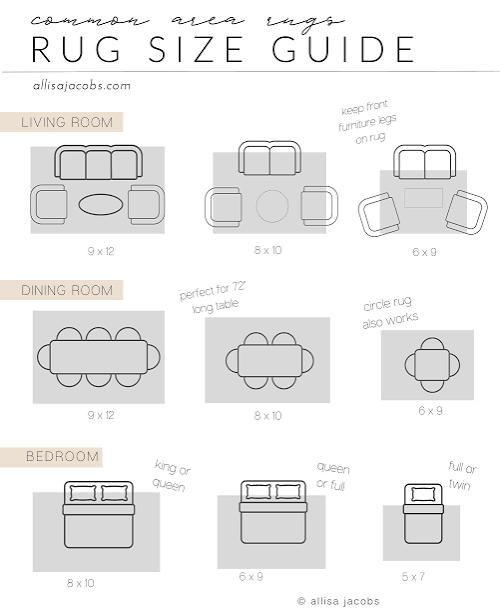
These simple rug placement rules living room can instantly improve your space, and they cost nothing extra since it is simply a matter of repositioning what you already have.
This is one of the most asked questions: should rug go under couch?
The answer is yes, but it depends on your layout, room size, and how much of the floor you want visible.
Only the front legs of the sofa and chairs sit on the rug. This works best for small and medium rooms because it keeps the rug from overwhelming the space while still tying the furniture together visually.
All furniture sits completely on the rug. This creates a luxurious and connected look, perfect for large rooms where a bigger rug does not feel excessive. This style is popular in formal living rooms and homes that lean toward a more elegant, hotel-lobby aesthetic.
The rug sits in the center without touching furniture. This is not recommended unless the rug is very large, since a small floating rug in the middle of the room can look disconnected from the seating area and end up looking like an afterthought rather than a design choice.
Your sofa type plays a big role in choosing the rug size, and what works for one style of sofa may look completely wrong under another.
For a standard three-seater sofa, a 6×9 or 8×10 rug works best. It should extend slightly beyond the sofa on both sides, giving enough room for a side chair or two if you have them in the seating arrangement.
Sectional sofas need bigger rugs. An 8×10 or 9×12 rug is ideal to cover the seating area properly, since sectionals often wrap around a corner and need a rug large enough to sit under both the long and short sides without leaving one end floating.
For L-shaped couches, choose a large rug that fits under both sides of the sofa. This keeps the layout balanced and avoids the common mistake of the rug only reaching one arm of the L-shape while the other end sits directly on bare flooring.
Small rooms need smart choices. A wrong rug size can make the space feel even smaller, which is the opposite of what most people want when decorating a compact living area.
When learning how to pick the right rug size for small living room, remember that slightly bigger rugs work better than tiny ones. It may feel counterintuitive, but a larger rug in a small room often creates the illusion of more floor space rather than less.
These ideas help create the ideal rug size for apartment living room setups, where every design choice needs to work a little harder because the space is limited.
Open spaces can be tricky because there are no walls to define areas. In this case, rugs help divide the space and give each functional zone, like the seating area or the dining area, its own visual identity.
When choosing a rug size for open concept living room, use a large rug to define the seating area. Make sure all furniture fits comfortably within the rug boundary, and consider using a second rug in a different but complementary size to define an adjacent zone, such as a reading nook or dining table.
Centering your rug properly makes your room look balanced and neat. The rug should align with the main furniture, especially the sofa and coffee table, rather than being centered on the room itself if the furniture is arranged off to one side.
This improves rug alignment with coffee table and overall design, and it is one of those small adjustments that makes a room feel intentionally designed rather than randomly furnished.
Modern homes prefer clean and simple designs. In 2026, larger rugs are more popular because they make rooms feel bigger and more connected, especially in open-plan homes where a small rug can look lost.
Modern living room rug size ideas focus on:
This style works well with minimalist furniture and open layouts, and it pairs especially well with furniture that has exposed wooden legs, since the rug and the legs together create a light, airy feel rather than a heavy, closed-in look.
Choosing the right color is just as important as size. Light-colored rugs make your room look bigger, while dark rugs create a bold and cozy feel that works well in larger, well-lit spaces.
When selecting rug color and size combination, make sure it matches your furniture and walls. A balanced look makes your living room feel complete, and a general guideline is that larger rugs look best in calmer, more neutral tones, while smaller accent rugs can afford to be bolder since they cover less visual area.
You don’t need to spend a lot of money to get a good rug. There are many affordable options available, and price does not always reflect quality when it comes to rugs made from synthetic or blended materials.
| Rug Size | Price Range |
| 5×7 | $50 – $150 |
| 6×9 | $100 – $300 |
| 8×10 | $200 – $600 |
| 9×12 | $400 – $1000 |
This helps you choose budget rugs for living room size guide without overspending. It is often smart to invest a bit more in a larger rug, since it covers more floor space and has a bigger visual impact than spending the same amount on several smaller accessories.
Many people make simple mistakes when choosing rugs. Avoiding these can save you time and money, and most of these mistakes are easy to prevent once you know what to look for.
Understanding how to avoid rug size mistakes is just as important as choosing the right size, since fixing a poorly sized rug after the fact often costs more than getting it right the first time. A quick way to catch these mistakes before buying is to lay out old bedsheets or newspaper in the shape and size of the rug you are considering, then walk around the room for a day to see how it actually feels underfoot and visually.
Yes, both can happen.
A rug that is too small makes your room look disconnected. A rug that is too big can cover too much floor and look heavy, especially if it leaves very little bare flooring visible around the edges of the room.
The goal is balance. Your rug should fit your space without overwhelming it, leaving enough exposed flooring to frame the rug like a picture frame around a piece of art.
A rug can actually make your room look bigger if used correctly, and this is one of the easiest tricks for improving a small or awkwardly shaped space.
To achieve this:
These tricks answer the question: how to make living room look bigger with rug, and combining even two or three of them together can noticeably change how spacious a room feels.
Choosing the right rug is not about picking the prettiest design. It’s about choosing the right size, placement, and style for your space, and letting those practical decisions guide you before you fall in love with a color or pattern.
When you understand how to choose rug size for living room, everything becomes easier. Your furniture will look connected, your room will feel balanced, and your home will look more beautiful without needing to buy anything else.
Take your time, measure your space, and follow these simple rules. A perfect rug can completely transform your living room and make it feel like home, turning an ordinary floor into the foundation that ties your entire room together.
Even small adjustments, like shifting a rug a few inches to the left or swapping a 6×9 for an 8×10, can noticeably change how a room feels once everything is in place. So before you settle on a final choice, walk through each step in this guide one more time, measure twice, and trust that the extra effort now will save you from redoing the whole room later.

Leave a comment